
How can agroforestry be a solution to climate change?
What is agroforestry?
It refers to all agricultural practices that combine trees with crop cultivation and/or livestock raising on the same plot of land, while preserving the environment.
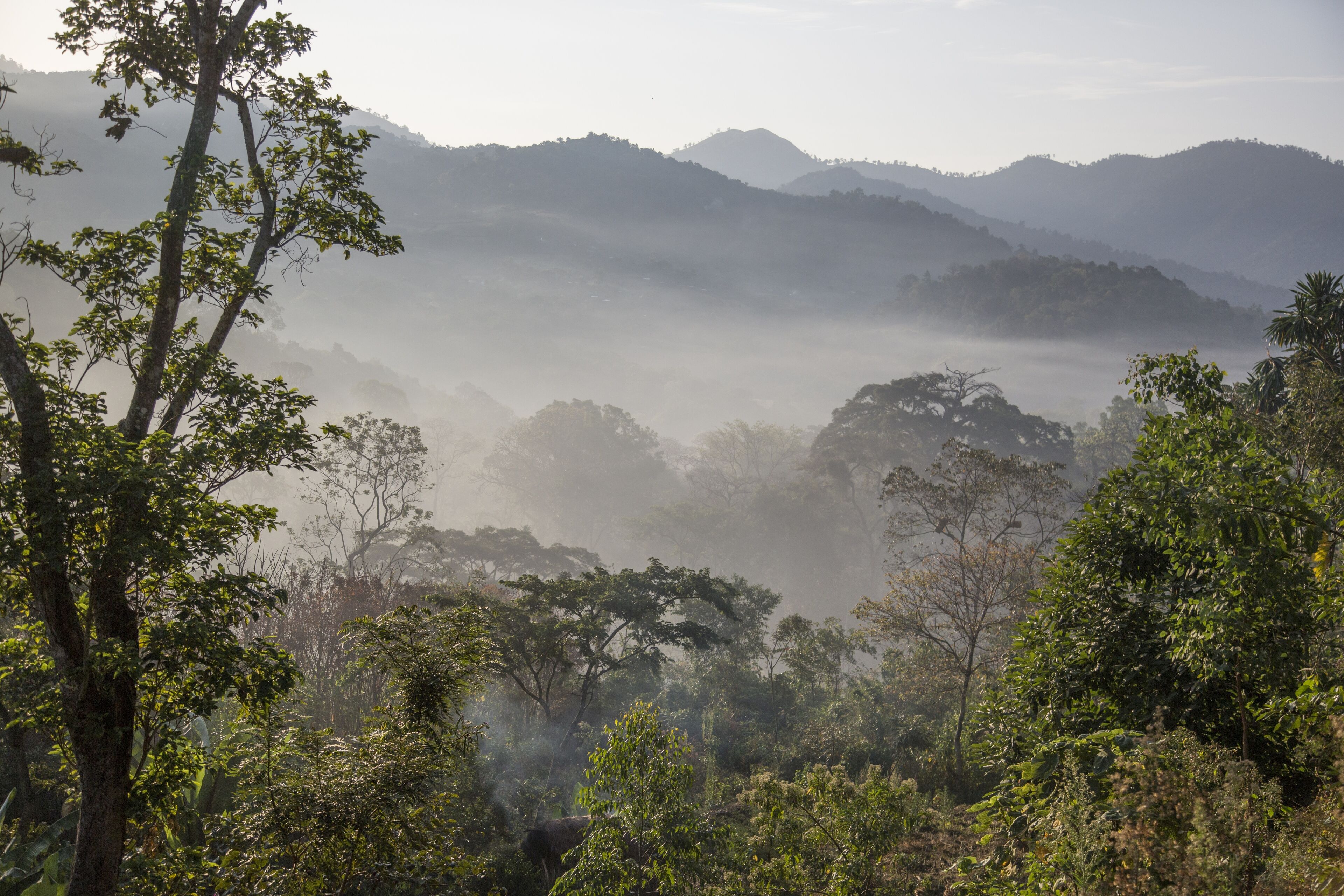
IMPACTS AND BENEFITS
Regulated Microclimate
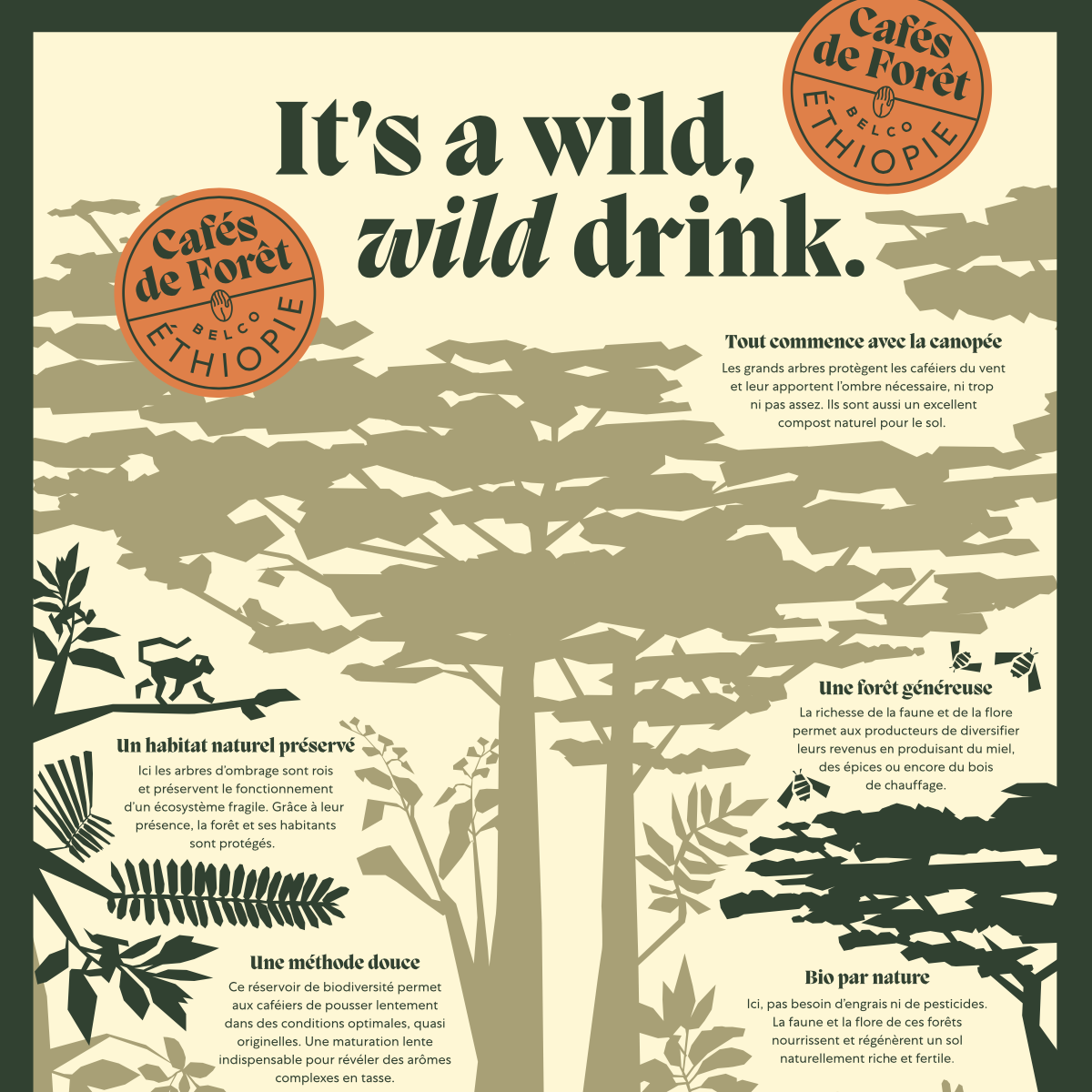
Shade trees maintain a temperature up to 5°C cooler than in direct sunlight, with an optimal range of 18–23°C
Living Soils
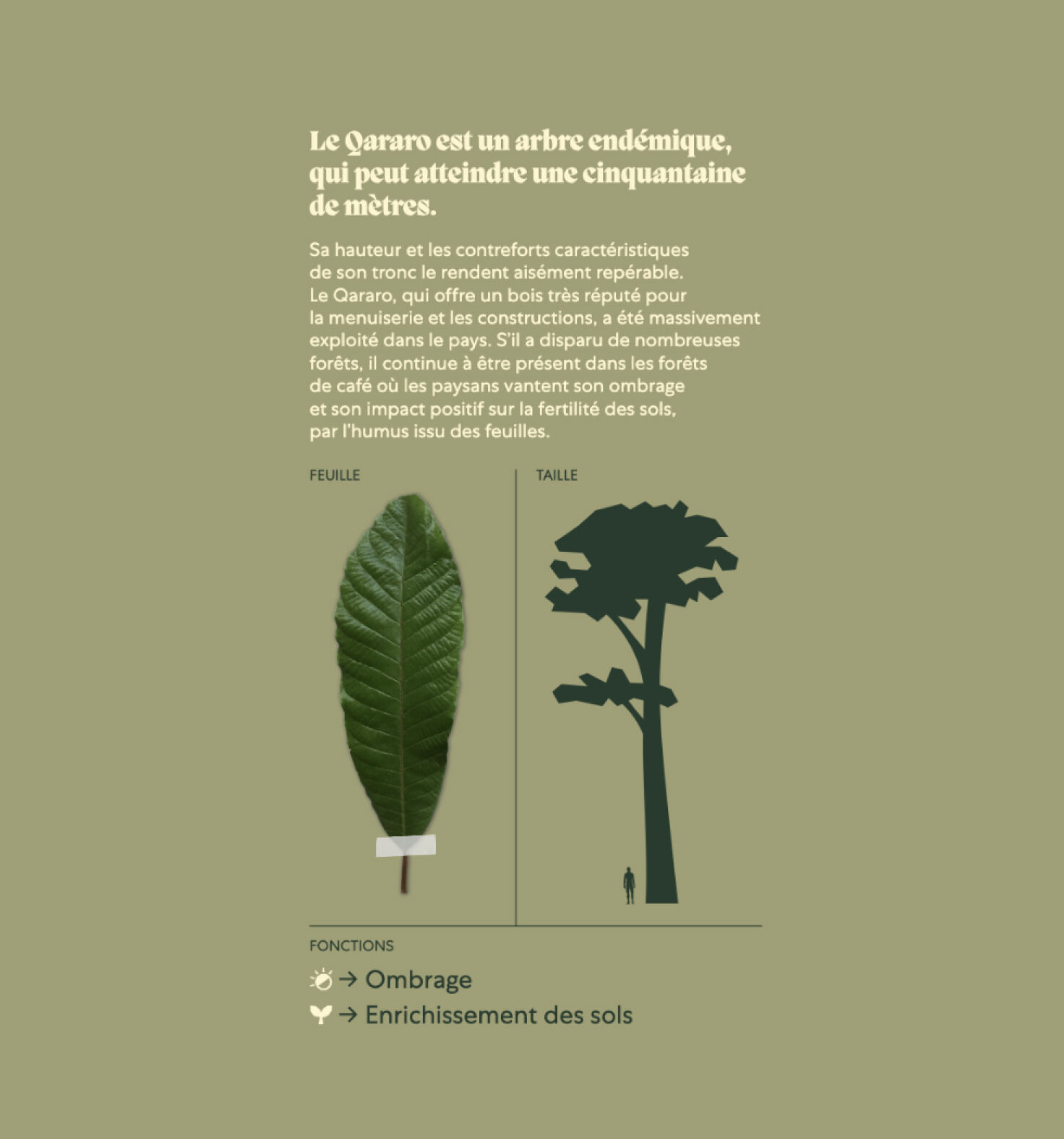
Diverse litter, active macrofauna, natural fertilization
Preserved Biodiversity
Complex agroforestry systems are home to 60% more animal species than a monoculture system
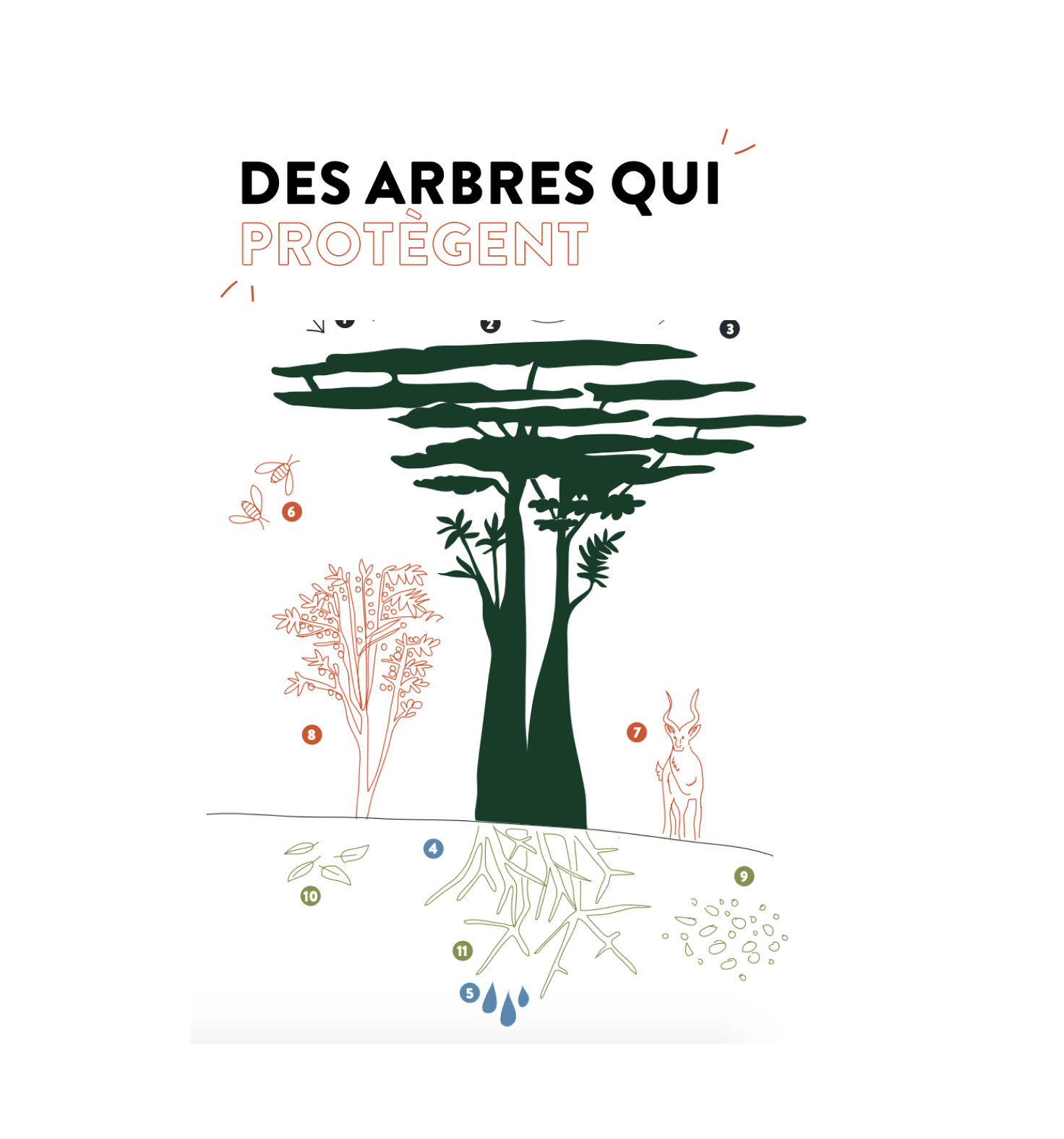
Trees that protect



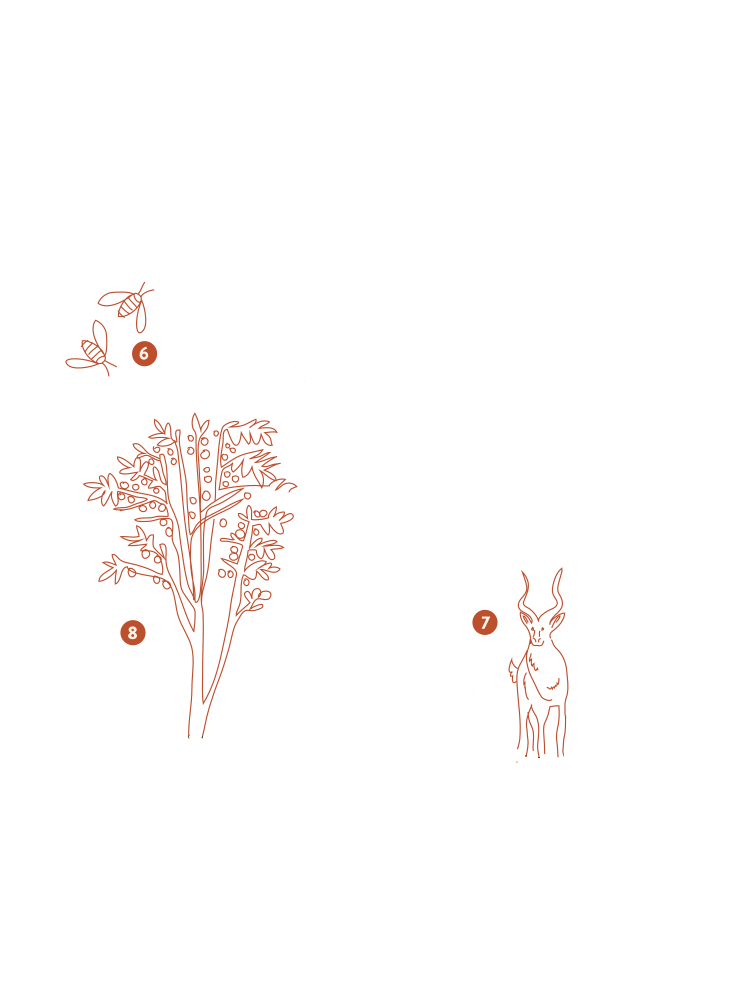
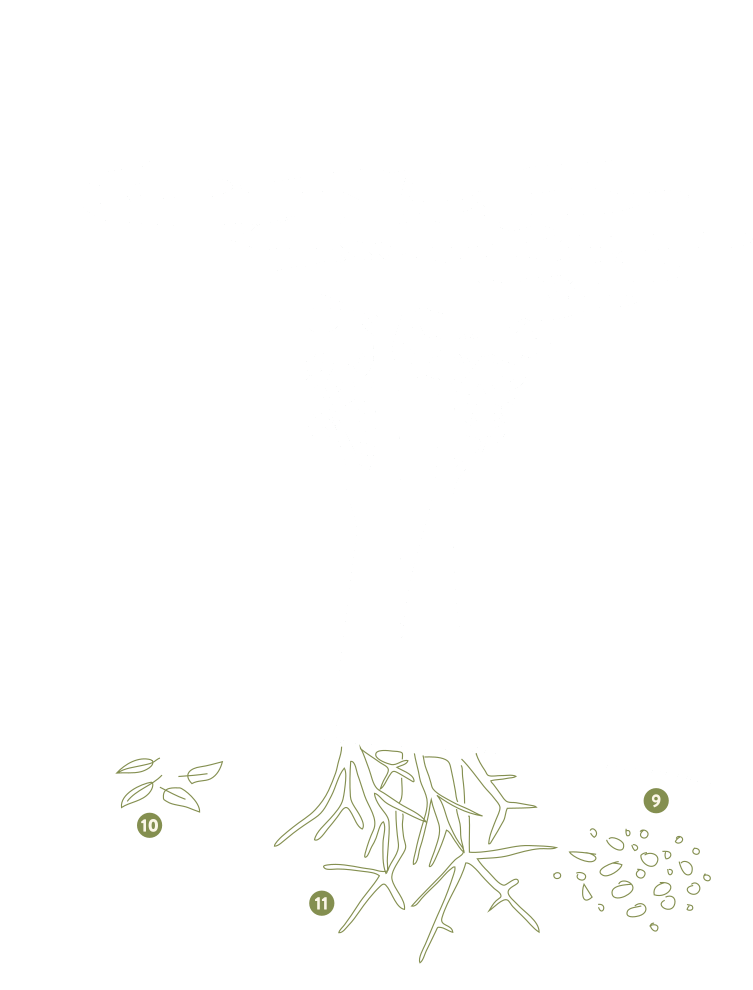
Trees that protect
Third-party partner
We developed a set of specifications that allows us to define three levels of agroforestry in collaboration with the French Agroforestry Association.
This infographic summarizes the various criteria that define the specific agroforestry requirements and practices for each of the three levels.
Discover 3 levels of agroforestry
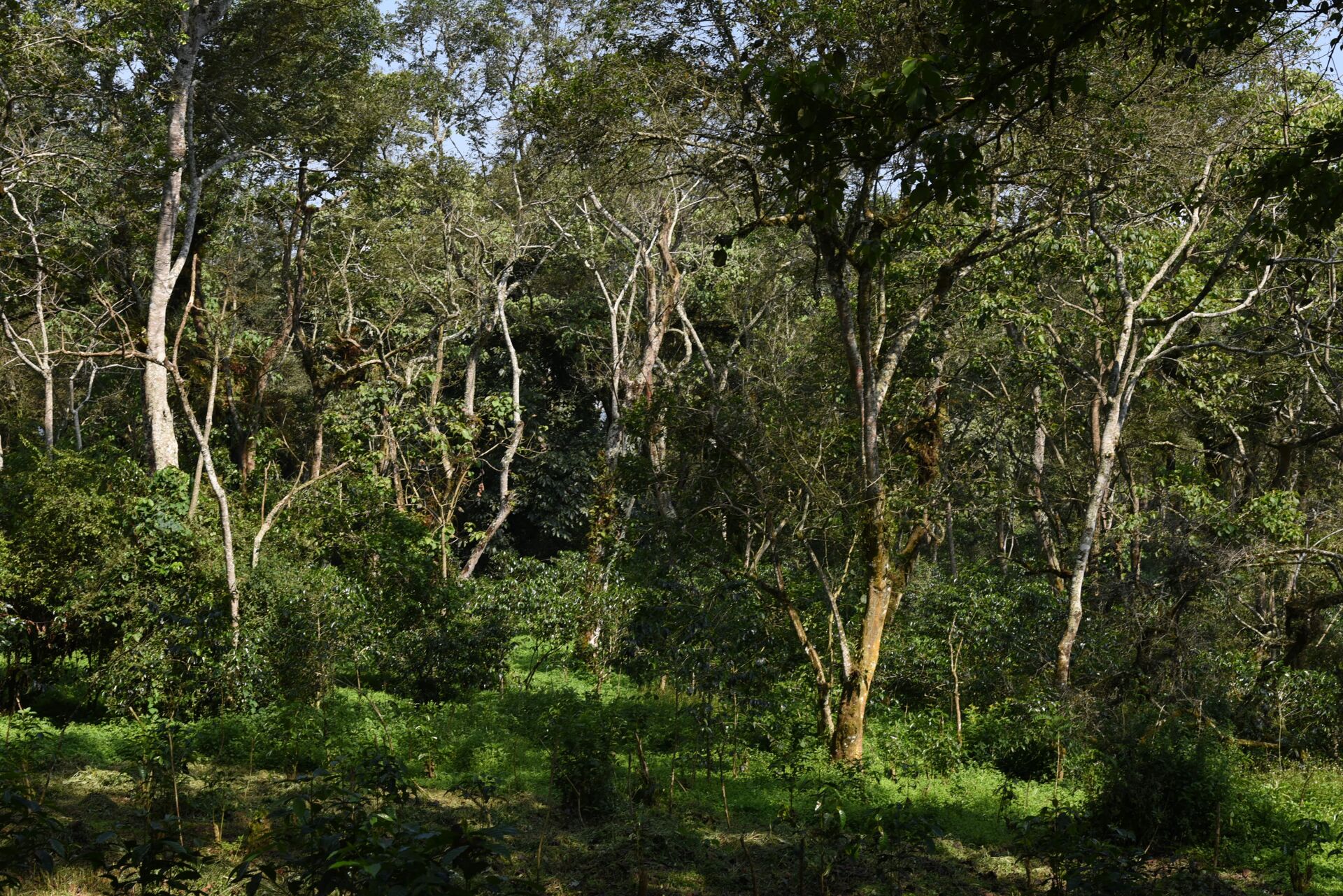
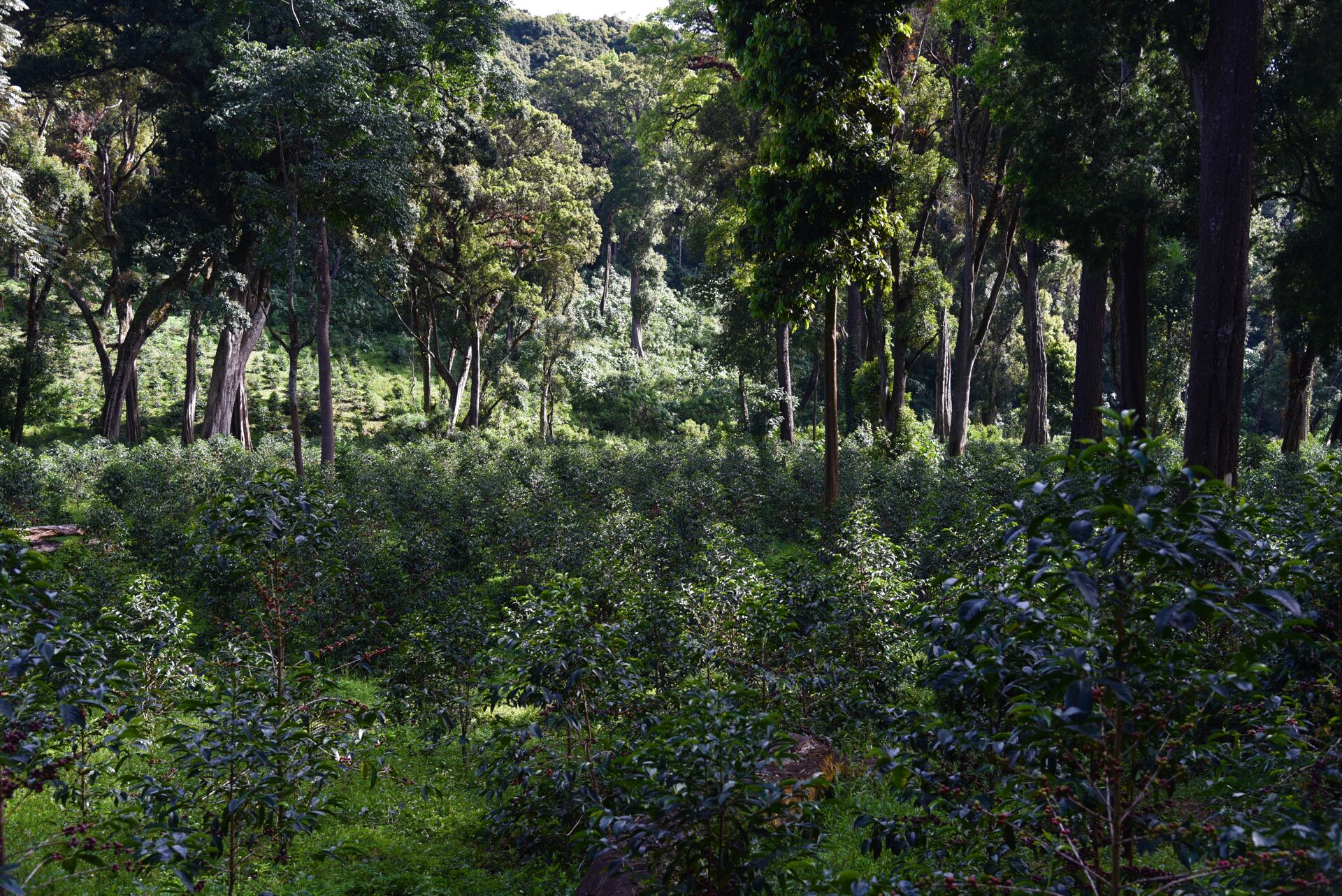
Why three levels? To highlight all agroforestry approaches! Many producers practice agroforestry without necessarily having three layers of shade or dozens of tree species, as we see in Ethiopia with Café de Forêt®. That’s why we offer coffees representing various levels of agroforestry—all beneficial, all worthy of recognition—so that no producer is left out when promoting this practice.
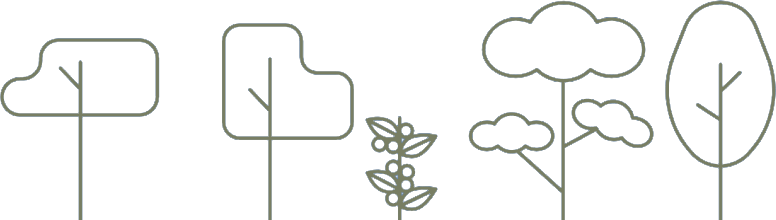
Basic
Number of shade tree species:
Between 3 and 5 species
Number of tree layers:
Single layer (1 layer)
Basal area¹:
Between 15 and 20 m²/ha
Canopy openness²:
> 75%
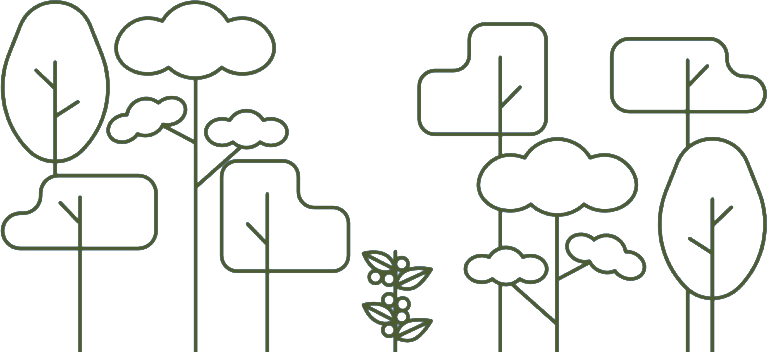
Complex
Number of shade tree species:
Between 5 and 10 native or exotic shade tree species
Number of tree strata:
At least 2 strata
Basal area:
Between 20 and 25 m²/ha
Canopy openness:
Between 50 and 75%
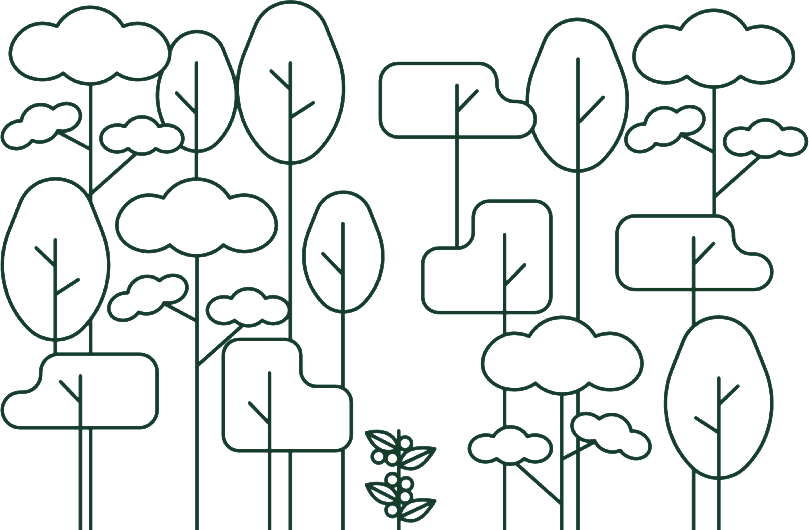
Forest coffee
Certified by the Café de forêt brand
Number of shade tree species:
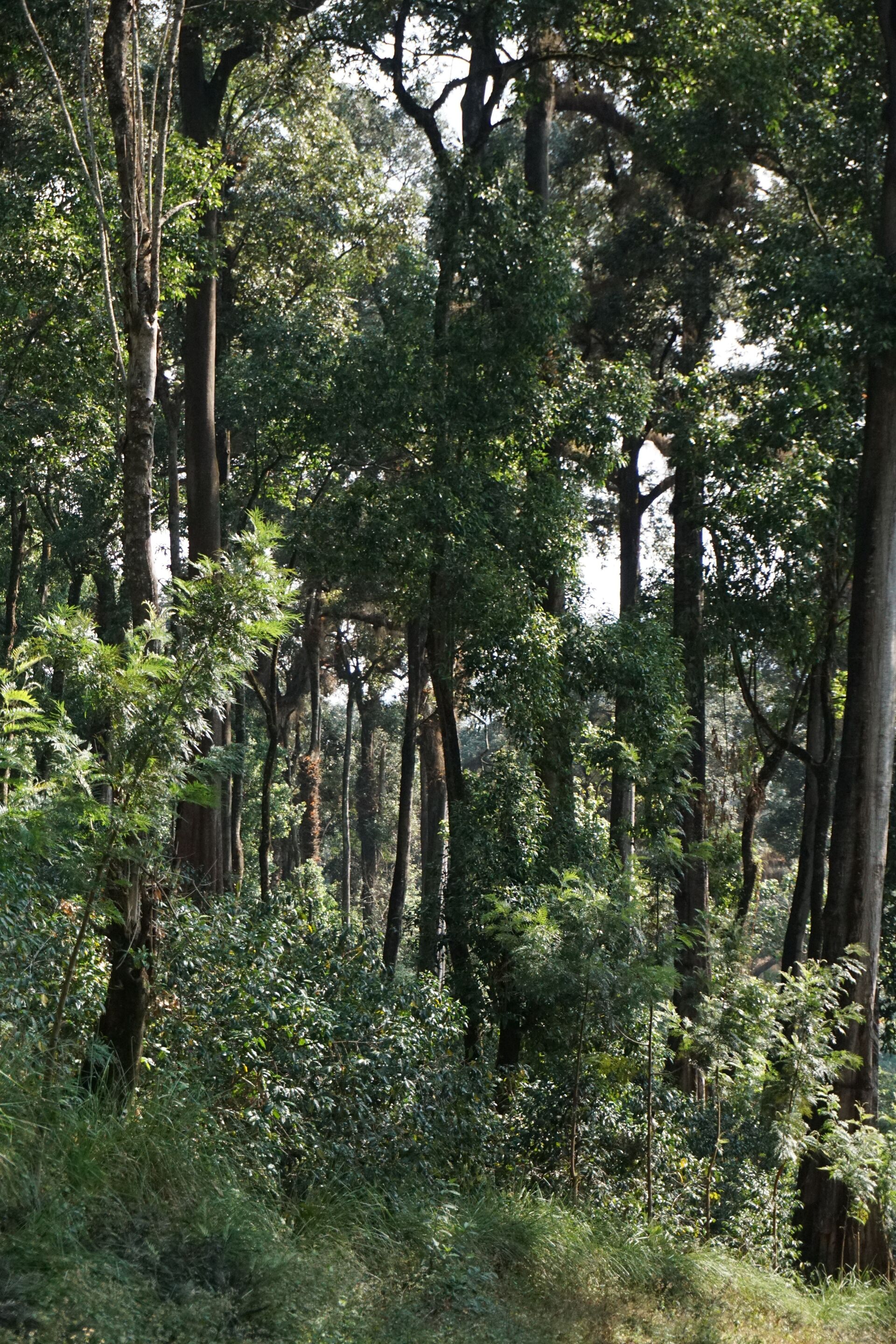
More than 10 species of shade trees, mostly native
Types of shade tree species present on the plot:
Most individuals and species are native (more than 50% native species and individuals)
No pesticides and local fertilization
Number of tree strata:
At least 3 strata
Basal area:
Dense to very dense tree cover with a basal area greater than 25 m²/ha
Canopy openness:
<50%

¹ Basal area: the area occupied by tree trunks on a plot. The higher the basal area, the denser the tree cover. It is expressed in m²/ha and provides a quick estimate of the biomass and shade provided by an agroforestry system.
² Canopy openness: measures the proportion of the sky visible through the tree canopy, expressed as a percentage.
Learn more about the 3 levels
Discover our Forest Coffees® brand through its 10 criteria
1. +10 species
Number of shade-providing species: Each species creates a distinct ecological niche (litter, wildlife habitat, etc.).

2. More than 3 tree-lined layers
Number of forested strata: Each stratum serves a different function (habitat for wildlife, carbon sequestration, etc.).

3. More than 50% of native individuals and species
Native Species Presence Index: Native species coevolve with the local environment : pollinators, fungi, and migratory birds and create unique networks of interactions.

4. More than 25 m²/ha of basal area
Basal area : measures the tree density of a plot. The higher it is, the more space the trees occupy and the more the soil benefits from dense shade.

5. less than 50% canopy opening
Canopy openness: Low canopy openness means dense shade, which results in cooler temperatures and reduced water stress.

6. Pruning that does not reduce shade by more than 25%
Shade Management: Pruning too severely can destroy in just a few days a microclimate that has taken several years to develop.

7. No pesticides
Pesticide use: In a complex agroforestry system, biodiversity replaces inputs.

8. Macrofauna Management
Practices implemented for macrofauna management: earthworms, ants, and beetles are key indicators of soil health; their presence is a sign of living, fertile, and well-structured soil.

9. Organic fertilizers produced on the farm
Types of fertilizers used: Tree litter and crop residues provide the soil with the nutrients that crops need.
How it changes when served in a cup
Beyond soil and biodiversity conservation, agroforestry directly influences the quality of coffee:
- Slow ripening: Under shade, coffee cherries ripen more slowly, concentrating more sugars and aromas
- Distinct terroir: Living, diverse soils impart a unique sensory profile to the bean, tied to its environment
- Consistency and resilience: a stable microclimate produces coffees that are more consistent from one year to the next, even in the face of unpredictable weather
Preserving agroforestry, therefore, means preserving both an ecosystem and a cup of coffee.
Tools! Find out more and promote agroforestry through your coffee roasts.
Booklets, posters, herbariums and point-of-sale advertising for leveraging your agroforestry coffees. Ask us for the printed version!

Our forest coffees
Spot price
€/kg
Spot price
€/kg
Spot price
€/kg
Spot price
€/kg
Spot price
€/kg
Spot price
€/kg
Spot price
€/kg