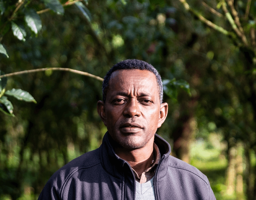
La ferme Tatmara de Negusse Tadesse se situe dans la région des Nations, Nationalités et Peuples du Sud. Elle est plongée au cœur d’une région caféière ancienne, à 15 km de Bonga, dans le village de Dakiti (district de Gimbo). Le Kaffa est une terre d’origine du café.
Le nom « Tatmara » tire sa signification, en langue kaffa, des mots « Tato » : roi et « Mara » : le pardon. C’est en effet dans ce lieu-dit que les rois successifs du Kaffa avaient pour habitude de se rendre une fois par an pour gracier les sujets prisonniers. Cette coutume a pris fin au XIXème siècle après l’annexion de ces terres par l’empereur Ménélik II.
La ferme de Negusse s’étend sur 82 hectares dont 5 sont réservés aux infrastructures, bâtiments et station de séchage. Il procède avec ses équipes à la collecte de cafés de forêt nature et honey, séchés sur lits africains. Les 77 hectares dédiés au café, qu’il cultive depuis 10 ans, sont repartis dans une forêt riche en espèces endémiques. Plus de 30 variétés d’arbres entourent les caféiers de Negusse et apportent un ombrage idéal pour une maturation lente des cerises. Certains arbres, comme le Qararo, sont en voie de disparition en Éthiopie et le modèle agroforestier que développe Negusse est une façon de les protéger. La présence de la canopée forestière native enrichit le sol en matière organique et en microorganismes, fournissant des nutriments essentiels aux plants de café. Cela est probablement un facteur significatif dans l'exceptionnelle qualité des cafés produits sur cette ferme. Tatmara est une ferme remarquable autant par la diversité de sa flore que par celle de sa faune. On y aperçoit grand nombre de singes, d’oiseaux et, parait-il, même quelques léopards, parmi un bruissement d’insectes, signe d’une belle vitalité. Negussie a donc planté plus de fruits sur la ferme pour détourner l'attention des animaux des cerises de café.
La biodiversité de cette ferme permet une diversification des activités de Negusse qui récolte aussi quelques épices comme la maniguette, ou du miel. Les arbres d’espèces différentes favorisent des floraisons échelonnées et permettent trois collectes de miel, aux caractéristiques bien distinctes. Les cafés de Tatmara, issus des variétés 74110, 74112 et Wush Wush regorgent d’arômes complexes et intéressants.
Nos équipes soutiennent Negusse dans le maintien de cette richesse écologique. Le travail que nous menons avec lui est axé sur deux angles, indissociables l’un de l’autre. Il s’agit de mettre en valeur la biodiversité rare de ces terres, tout en affinant la qualité de ses cafés. Pour cela Marjorie, notre agronome, a organisé plusieurs sessions de formation pour aider à améliorer les techniques de récolte, de séchage. Elle a aussi guidé les équipes de Negusse dans la mise en place du procédé honey. Fufa, notre agronome de l’agence d’Addis Abeba, Shambé et Jacques poursuivent cet accompagnement tout au long de l’année.
Leurs projets 2025 :
- Installation de l’infrastructure de production d’énergie solaire.
- Accueil et formation de professionnels du café (torréfacteurs, barista, producteurs) pour la valorisation et la promotion de la production de café sous forêt.
- Mise en culture de la parcelle R&D