
A sustainable nursery to support biodiversity and coffee agroforestry
Project Overview
This project aims to establish a network of permanent nurseries for native tree species in Ethiopia’s coffee-growing regions. The project supports biodiversity conservation and shade-grown coffee production in Ethiopia. The cultivation of native tree species is essential to the coffee ecosystem and to sustainable agriculture
Context
Ethiopia is the birthplace of Arabica coffee. In the Jimma, Kaffa, and Sidama regions, coffee traditionally grows under a dense canopy of native trees. These ecosystems are now under threat: agricultural expansion, deforestation, and the gradual replacement of native species with fast-growing exotic tree species are depleting biodiversity and weakening coffee farms. Less fertile soils, degraded microclimates, and reduced climate resilience—the consequences have a direct impact on the sustainability of production.
Objective: to strengthen biodiversity, improve soil fertility, and make coffee farming systems more resilient.
Why fund a shade tree nursery?
Funding nurseries for native shade trees in coffee-growing areas in Ethiopia offers key benefits for the sustainability of local crops and ecosystems:
- Improved growing conditions: Shade regulates temperature, reduces water stress, and protects coffee trees from extreme weather conditions.
- Biodiversity and ecosystem services: Native trees support local wildlife (birds, pollinators) and improve soil fertility through organic litter composed of leaves and branches.
- Water and soil management: Trees reduce erosion, promote water retention, and limit the leaching of nutrients essential to coffee.
- Resilience of coffee producers: Trees can provide supplemental income through the sale of fruit or timber
Carbon sequestration and combating climate change: By storing CO₂, these trees help mitigate the impacts of climate change on the coffee sector.
Complete documentation
Page in PDF and QRCode in all languages
Every action counts. Would you like to get involved in this project? Contact your sales representative.
Phase 1 completed:
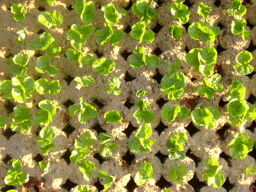
During the first phase, a permanent nursery was established at the Badeyi washing station (Jimma). A total of 21,515 seedlings of 13 species were produced and distributed to 212 farmers. A rest shelter was also built for the station’s workers.
Launch of Phase 2 (since January 2026)
Jimma — Expansion of the Badeyi Nursery
The Badeyi nursery is continuing and expanding its activities. Ten species of native, versatile trees have been selected based on feedback from the field and the preferences of producers. The goal is to produce 11,000 tree seedlings and 6,500 wild coffee seedlings, which will be distributed to 6 partner suppliers and 120 outgrowers in the Jimma and Kaffa regions.
At the same time, the survival of seedlings distributed during Phase 1 is being monitored. Field visits are conducted to assess survival rates and management practices on the farms. Dead seedlings are replaced at the start of each new planting season to maintain target densities.
Sidama — New Site in Shantawine
A second permanent site is currently being established at the Shantawine processing station, operated by DWD Coffee, in the Daye Bensa Woreda. Six species of native trees will be grown there and distributed to local coffee producers. The entire infrastructure is built to last: fencing, shade structures, guardhouses, and restrooms. The goal is to increase tree biodiversity by 20% in the targeted areas.
Crops grown in 2026
- Cordia africana
- Albizia gummifera
- Acacia abyssinica
- Podocarpus falcatus
- Pouteria altissima
- Olea capensis
- Millettia ferruginea
- Schefflera abyssinica
- Polyscias fulva
- Prunus africana
Phase 2 Budget
9,437 USD / 8,257 €: covers both sites
2026 Goals
- Produce and distribute seedlings of 10 species in Badeyi
- Establish the Sidama site and produce seedlings of 6 species
- Build producers’ capacity in agroforestry management
- Ensure ongoing field monitoring, with a review in September 2026
Complete documentation
Page in PDF and QRCode in all languages
Discover the coffee linked to this project
Phase 2 marks a new stage in the project's expansion. It is being carried out simultaneously at two sites: the expansion of the existing nursery in Badeyi (Jimma) and the establishment of a brand-new permanent site in Sidama.
Project Timeline
November 2024
Design and Planning
Site selection, equipment procurement planning, road access, water access, site grading, and finding labor.


January 2025
Construction
Transporting soil to spread it on the site, preparing the ground, and building raised beds and a shed.


March 2025
Getting the Nursery Up and Running
Clearing and preparing plots, mixing soil and compost, setting up planting beds, and planting the first seedlings (12 species planted, including Podocarpus, Acacia, Jacaranda, and Grevillea)


June–August 2025
Distribution of seedlings to growers in the area
Continuing planting and watering, weeding and pest control, building shade structures, transplanting seedlings into grow bags, and distributing seedlings to growers.


October–December 2025
Construction of the rest area at Badeyi Station
Alongside the nursery, a rest area for workers at the Badeyi treatment plant is being built. It includes an open rest area for breaks and meals, as well as a closed changing room for women.
January 2026
Launch of Phase 2
The implementation plan is being revised to include the second site. Memoranda of understanding are being signed with partner suppliers. Staff are being recruited for both sites.

February–May 2026
Implementation at both sites
In Badeyi, sowing of the 10 native species is beginning as a continuation of Phase 1. In Shantawine, the seedbeds are being prepared, and the six species selected for the site are being sown.

June 2026
Distribution and Follow-up
Mature seedlings are distributed to suppliers and growers in the Jimma, Kaffa, and Sidama regions. Continuous on-site monitoring is conducted to support the transplanting process in the fields.


“Most nurseries are short-lived. The goal of this project is to create a sustainable nursery with an infrastructure that can adapt over time. This site could serve as a base for developing into a training center on agroforestry practicess.”


